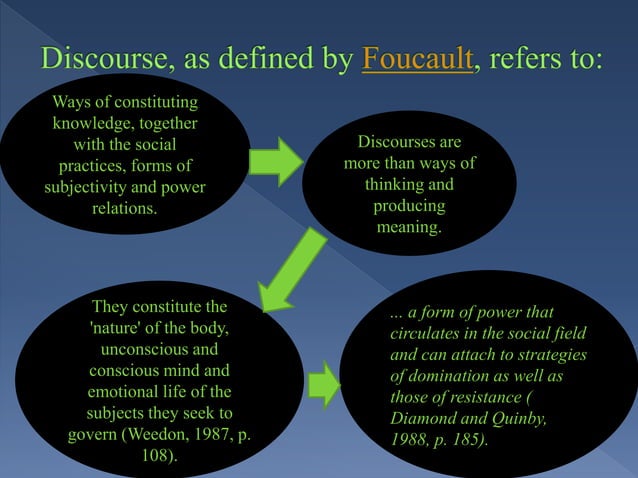
(Ali, 2015)
I have been developing a conceptual model aimed at deepening our understanding of organisational phenomena and their roles within society. This endeavour is grounded in a set of foundational assumptions:
- All entities are constructed through discourse; thus, any explanation must be articulated in discursive terms.
- This discursive foundation leads to a radically constructionist epistemology, wherein consciousness is not an inherent attribute of autonomous individuals but is instead constructed through discourse.
The nature of the world is inherently dynamic and chaotic (Hoffman, 2019).
From these premises, it follows that individuals impose structure upon the world through discourse, enabling action. However, these structures are invariably incomplete, contradictory, and unstable, rendering them susceptible to deconstruction, as Derrida (1976) suggests.
These assumptions provide a paradigm within which to operate, situating my perspective firmly within postmodernism. Recognising that all scholarship operates within paradigms—often unconsciously—it becomes imperative to expose and understand these frameworks. Scholars must be adept at navigating multiple paradigms, as questioning one’s foundational assumptions necessitates a paradigm shift. To facilitate this understanding, I have delineated three master paradigms prevalent in Western historical contexts: the theocentric, the modernist, and the postmodernist, each encompassing various sub-paradigms.
A prevalent issue among scholars is the confusion surrounding levels of analysis. To elucidate this, I propose a metaphor: envision observing reality through a cardboard tube (or the barrel of a microscope or telescope), with a piece of perspex at the near end serving as a screen displaying the ever-evolving phenomena we perceive. As one moves down the tube, the level of abstraction and depth of explanation increases. At the bottom of the tube is reality, and so, as one moves down the tube it may be thought of as a tube of analysis but, as one moves in the opposite direction up the tube, you might think of it as a tube of interpretation.
Choosing the screen at the top as the level of analysis, as many practitioners do, allows for the creation of theories with predictive power but lacks explanatory depth. Conversely, at the far end lies, for the postmodernist, unorganised and unknowable reality, devoid of self, organisation, or meaning—a realm some sociologists and physicists explore. Meanwhile, for the modernist, reality is as we perceive it and it is, therefore, the gold standard of ‘truth’.
Intermediate levels within the tube host sociological theories that deconstruct surface phenomena to reveal underlying structures and connections. Positivists operate near the tube’s entrance, realists delve deeper, and postmodernists venture toward the tube’s end. For example, the Competing Values Framework model resides in the upper half; Grid-Group Cultural Theory occupies a mid-level position; Foucault approaches the tube’s end; and Deleuze & Guattari (1987) peers back from the farthest depths, positing concepts like the “body without organs”1 that precede subjectivity.
At the tube’s depths, the self emerges as an “assemblage” (Deleuze & Guattari, 1987), embodying a dual nature: a unique locus of action with autonomy, and a node within a network, collectively constructed. Consciousness and community are forged through discourse, which engenders meaning and truth, subsequently giving rise to identity and knowledge. Discourse, akin to the flow of consciousness (“durée” in Bergson), is chaotic and must be structured to be functional. This structuring involves delineating boundaries and establishing rules within these confines, forming “language games” that generate meaning and truth. These rules of formation (Foucault, 1972) lead to “discursive formations” that create structures and, by extension, organisations at various levels, three levels in late capitalism. to my theory. I liken organisation to a river, an assemblage of discursive flow and the governing rules of discursive formations that dictate relationships between the smallest units of discourse, such as the “utterance” (Bakhtin, 1981) or “enunciation” (Foucault, 1972).
Applying this framework, Grid-Group Cultural Theory, situated mid-tube, analyses organisation through individual, collective, and hierarchical lenses. While analytically valuable, it cannot probe deeper levels. Foucault (1972), positioned further down, elucidates how discourse constructs organisation, thereby contextualising the utility of Grid-Group. At the tube’s base, Deleuze and Guattari (1976) deconstruct entities into components, offering metaphors such as “assemblage” and the “body without organs” and to describe these elements and their interrelations.
Conceptual models can be applied at their level of origin or higher but not below. Nonetheless, any model can be empirically tested at the tube’s surface to assess its consistency with observable evidence. For instance, Deleuze’s theories can be applied across levels, though their efficacy may diminish at higher levels where models designed for those strata may be more efficient.
Understanding paradigms and the hierarchical levels within the tube of analysis enhances our ability to discern relationships among phenomena and across scholarly endeavours, employing diverse theoretical frameworks.
Footnotes
- Deleuze – the body without organs (BWO)
Applying Deleuze and Guattari’s Body without Organs (BWO) (Deleuze & Guattari, 1976) to management challenges traditional hierarchical, rigidly structured organisations in favour of fluid, adaptive, and creativity-driven systems. Here’s how the BWO might reshape management theory and practice:
Against Bureaucratic “Organs”
The BWO resists the “organs” of management—job titles, siloed departments, and top-down control—that stifle innovation. Instead, it favours role fluidity (e.g., holacracy, cross-functional teams).
Example: Valve Corporation’s “flat hierarchy,” where employees self-organise around projects rather than fixed roles.
Desiring-Production in Organisations
The BWO prioritises desire (creative energy, intrinsic motivation) over rigid KPIs. Management becomes about enabling flows (ideas, collaborations) rather than enforcing procedures.
Example: Google’s “20% time” policy, allowing employees to pursue passion projects, leading to innovations like Gmail.
Deterritorialising Management
The BWO disrupts entrenched power structures (e.g., rigid corporate ladder) in favour of networked leadership (e.g., agile squads, decentralised decision-making).
Example: Spotify’s “Squad Model,” where autonomous teams operate like startups within the company.
Experimentation & “Becoming”
A BWO-inspired approach embraces constant reinvention (e.g., pivoting strategies, prototyping cultures). Failure is part of productive desiring-machines.
Example: Amazon’s “Day 1” philosophy, treating every day as a startup phase to avoid bureaucratic stagnation.
The Dark Side: Risks & Tensions – Chaos vs. Control
Without some structure, organisations risk dysfunction (e.g., burnout from excessive flexibility). The BWO is a practice, not a prescription—managers must balance freedom with coherence.
Example: Sappos’ shift to holacracy led to confusion and turnover, showing the need for gradual deterritorialisation.
Conclusion: A BWO approach to management would emphasise:
– Fluid hierarchies instead of rigid organisational charts
– Autonomous experimentation instead of micromanagement
– Desire-driven innovation instead of static job roles
References
Ali, N.T. (2015) Foucauldian Discourse Analysis, Available at: https://www.slideshare.net/slideshow/presentation-cda/43743953, Accessed on: 15/05/2025.
Bakhtin, M.M. (1981) The Dialogic Imagination: Four Essays. Translated by Emerson, C. and Holquist, M. Austin: University of Texas Press.
Deleuze, G. and Guattari, F. (1987) A Thousand Plateaus: Capitalism and Schizophrenia. Translated by Massumi, B. Minneapolis: University of Minnesota Press.
Derrida, J. (1976) Of Grammatology. Translated by Spivak, G.C. Baltimore: Johns Hopkins University Press.
Foucault, M. (1972) The Archaeology of Knowledge. Translated by Sheridan Smith, A.M. New York: Pantheon Books.
Hoffman, D.D. (2019) The Case Against Reality: Why evolution hid the truth from our eyes. London: Allen Lane.
Thompson, M., Ellis, R. and Wildavsky, A. (1990) Cultural Theory. Boulder, CO: Westview Press.
 Peter Atkinson .... for deep thinking
Leave a comment